
Project Overview
We implemented an IIoT-based Remote Fuel Monitoring System for a Middle East-based marine customer to enable real-time visibility, control, and optimization of fuel consumption across their vessels.
Without an integrated monitoring system, marine operators often face challenges such as inaccurate fuel tracking, manual log errors, undetected fuel losses, and lack of real-time visibility during offshore operations. These gaps can lead to increased operational costs, inefficient fuel usage, and difficulty in identifying anomalies or performance issues across different vessel systems.
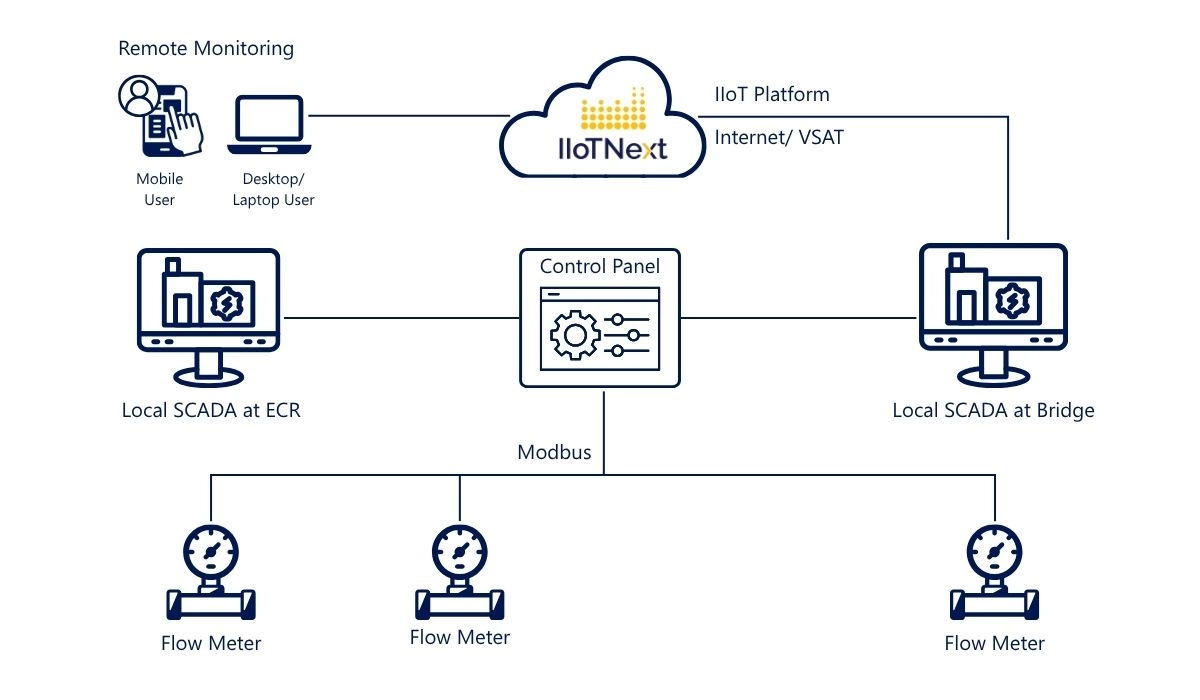
To address these challenges, we deployed an intelligent fuel monitoring solution that captures real-time data from flow meters installed across critical fuel lines, including bunkering, cranes, main engines, and diesel generators. This data is collected through an onboard data acquisition panel and transmitted via Internet or VSAT to a centralized IIoT platform. Additionally, local SCADA interfaces at the Bridge and Engine Control Room (ECR) provide operators with real-time insights, ensuring continuous visibility even in low-connectivity conditions.
Project Outcomes
-
Eliminated Manual Fuel Logging
Transitioned from manual record-keeping to automated data capture, improving accuracy and reliability.
-
Real-Time Visibility Across Vessel Systems
Operators and shore teams gained continuous insight into fuel consumption across all critical systems.
-
Early Detection of Fuel Anomalies
Enabled quick identification of irregular consumption patterns, helping prevent fuel losses and inefficiencies.
-
Improved Operational Planning
Fuel consumption insights across different operational modes supported better voyage and activity planning.
-
Centralized Monitoring for Shore Teams
Fleet managers could remotely monitor vessel performance without dependency on onboard reporting.
The Solution
-
Data Acquisition
Flow meters were installed across critical fuel lines, including bunkering, crane operations, main engines, and diesel generators. These instruments continuously measure fuel consumption and transmit the data to a centralized data acquisition panel located in the Engine Control Room (ECR).
-
Local Monitoring
SCADA screens installed at the Bridge and ECR provide onboard operators with real-time visibility of fuel consumption and system parameters. This ensures uninterrupted access to critical operational data, even when external connectivity is unavailable.
-
Remote Monitoring
The collected data is transmitted securely to the IIoTNext cloud platform using Internet or VSAT connectivity. Authorized users can access real-time dashboards, historical reports, and performance analytics from anywhere in the world using desktop or mobile devices.
-
IIoTNext Platform – Centralized Cloud Monitoring
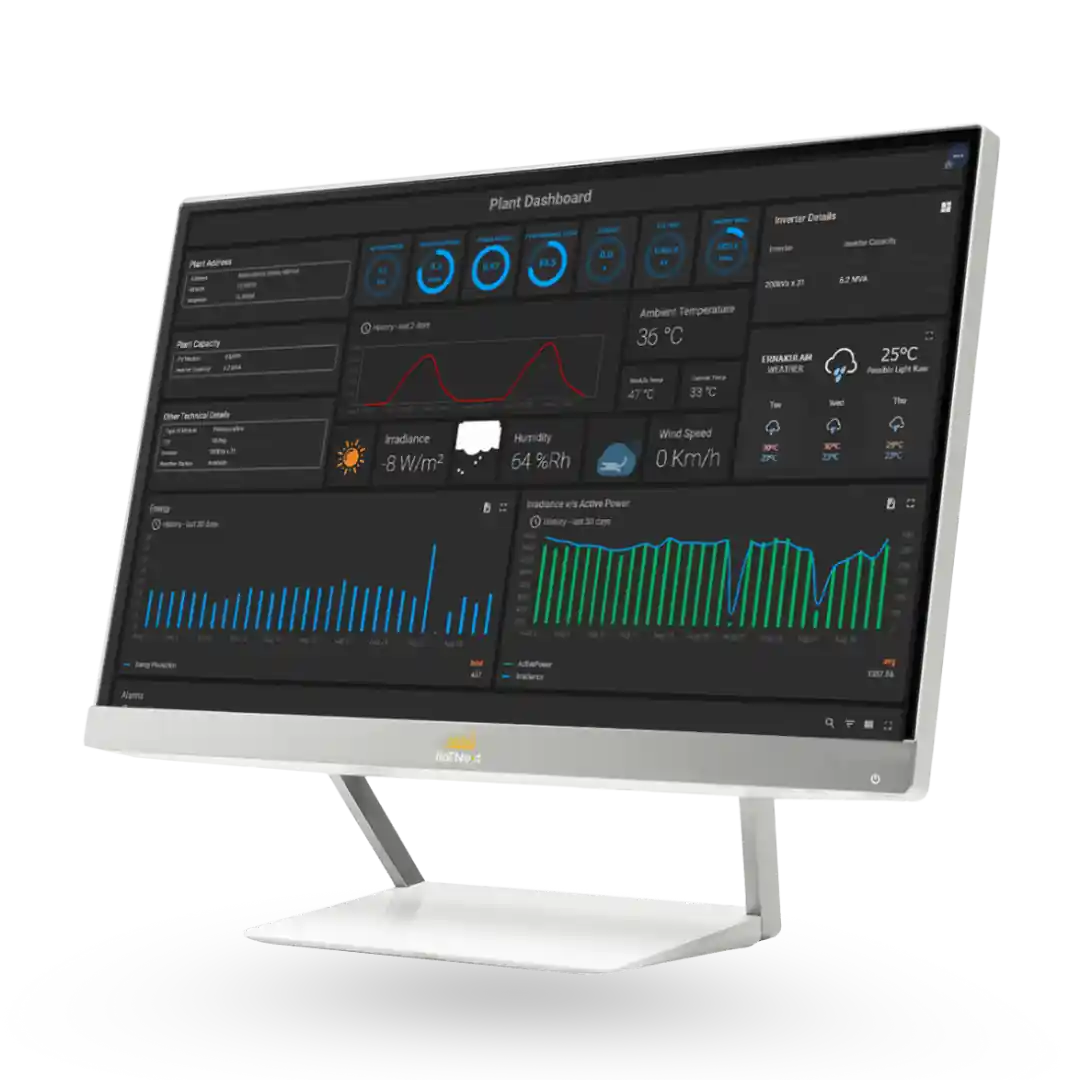
The IIoTNext platform provides a unified, cloud-based environment for real-time monitoring and analysis of fuel consumption across vessel systems, including bunkering operations, crane usage, main engines, and diesel generators.
Platform Highlights:
- Real-time dashboards for live fuel consumption across all vessel systems
- Fuel consumption reports segmented by operational modes such as sailing, standby, and jacking
- Historical data access for trend analysis and performance benchmarking
- Centralized fleet monitoring for multiple vessels through a single interface
- Role-based access control for secure and customized user visibility
- Accessibility from mobile and desktop devices for remote monitoring
Result
The implementation of the IIoT-based fuel monitoring system transformed the customer’s approach to fuel management by providing complete visibility, accuracy, and control over fuel consumption. The solution enabled both onboard and shore-based teams to monitor, analyze, and optimize fuel usage in real time, leading to improved operational efficiency and cost savings.
Key Benefits
- Reduced Fuel Wastage and Unaccounted Losses Continuous monitoring and anomaly detection help identify fuel leakages, pilferage, or inefficiencies early, significantly reducing avoidable losses.
- Improved Fuel Efficiency Across Operations Visibility into consumption patterns across different vessel activities enables optimization of fuel usage during sailing, standby, and operational modes.
- Better Cost Control and Budgeting Accurate, real-time fuel data allows operators to track consumption against planned usage, improving cost forecasting and financial control.
- Increased Operational Transparency Both onboard and shore teams work with the same real-time data, reducing dependency on manual reporting and improving accountability.
- Faster Decision-Making During Operations Instant access to actionable insights enables operators to take corrective actions quickly, minimizing inefficiencies during critical operations.
- Standardization Across Fleet Operations Enables uniform fuel monitoring practices across vessels, making it easier to benchmark performance and implement best practices fleet-wide
Remote Marine Fuel Monitoring System by IIoTNext
Fuel is the largest operating cost in today’s marine industry, yet many vessel owners still struggle with limited visibility due to manual logs, disconnected systems, & lack of centralized monitoring. Discover how IIoTNext’s remote fuel monitoring solution connects onboard instruments to a cloud platform, delivering real-time insights, historical data, & fleet-wide visibility from anywhere.

System Architecture
Conclusion
By combining real-time data acquisition, onboard visualization, and cloud-based analytics, the solution delivers improved transparency, operational control, and efficiency. It empowers both vessel crews and shore-based teams with actionable insights, enabling smarter and more sustainable marine operations.
Looking to optimize fuel efficiency and gain real-time visibility across your fleet? Get in touch with us to explore how our IIoT-based solutions can transform your vessel operations.
FAQ
How does the system help detect fuel losses and anomalies on offshore vessels?
By continuously monitoring fuel flow in real-time and transmitting data to our centralized platform, the system instantly identifies irregular consumption patterns, unexpected flow variations, and potential fuel losses. Operators receive immediate alerts enabling them to identify and address anomalies before they impact operational efficiency.
Does the system work in low-connectivity offshore environments?
Yes. The system is designed to operate reliably in low-connectivity offshore conditions. All data is continuously captured and made available to onboard operators through local SCADA interfaces at the Bridge and Engine Control Room (ECR), ensuring uninterrupted real-time visibility. When Internet or VSAT connectivity is restored, the locally stored data is automatically synchronized with the cloud platform, ensuring no data loss and complete continuity.
Is technical expertise required to operate the fuel monitoring system?
No. The system is designed for ease of use, with intuitive dashboards available both onboard (at the Bridge and Engine Control Room) and remotely through the cloud platform. Operators can monitor real-time fuel consumption and receive alerts without requiring specialized technical expertise. The system is configured during implementation, ensuring a seamless experience for onboard and shore-based teams.
Can the system integrate with existing onboard data systems and sensors without modifying them?
Yes. The IIoTNext solution is designed to seamlessly integrate with existing onboard infrastructure. The control panel interfaces with the client’s systems without requiring modifications, eliminating the need for costly replacements and minimizing installation disruption while enabling unified visibility of fuel and operational data
Can fuel monitoring thresholds be customized for different vessel systems?
Yes. Flow rates, consumption thresholds, and alert parameters can be individually configured for bunkering operations, crane usage, main engine fuel consumption, and diesel generator operation based on your specific vessel specifications and operational requirements.